
Power & Energy
For power and energy resources, micromesh precision expanded metal provides the necessary electrical properties or shielding capabilities required. Expanded metal mesh foils play a crucial role in power and renewable energy industries. With that in mind, copper is the highest rated thermal and electrical conductor among the engineering metals. The power systems that utilize copper and copper alloys (brass, bronze) generate and transmit energy with maximum efficiency and with minimum environmental impacts. Our micromesh design options maintain superior shielding, conductivity, and energy transfer properties.
Our micromesh provides the necessary flexibility, flow of fluids, high surface area, and cost-effective features for film batteries and fuel cells. It is permeable by design and allows the transport of the protons from the anode to the cathode through the membrane. Micromesh is manufactured in coils and can be slit and processed as discs or most any shape as required.
Micromesh is also used in the emerging fuel cell market and is used for membrane support, catalyst support, current collection, flow distribution and gas filtration. Additionally, the mechanical properties of some thin membranes can be improved and strengthened by integrating micromesh.

In the aerospace, automotive, telecommunication, and electronics industry, micromesh precision expanded metal mesh foil is used as shielding against electromagnetic radiation. Our micromesh reduces the volume of unwanted frequency levels, providing reliable high frequency shielding performance.
Niles micro metal mesh foil is made from aluminum, copper, monel, nickel, and other conductive materials. Testing, design and precision-engineered materials are available for specific requirements. Expanded metal mesh foils are continuous, display consistent, predictable conductivity and have no joints or welds unlike knit or woven meshes. Our metal mesh foils will not fray or unravel and conform readily to complex surfaces, making them well-suited to composite manufacturing processes.
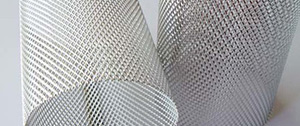
Precision expanded metal micro mesh is particularly useful in electrolysis. With evenly distributed edges across the anode surface, the mesh produces outstanding results in current density and plating. The metal mesh provides good solution movement, electrolyte transfer and plating.
The expanded metal mesh form is the most commonly used shape for titanium anodes, among wires, sheets or other available shapes and sizes. Mesh anodes are very effective with the use of platinum. They are available with a surface factor of 0.5-2.3dm2. Our expanded metal mesh is created thin, strong, flexible, and lightweight for all installations and applications.
Frequently Asked Questions
Micromesh offers a unique balance of strength, airflow, and precision. It is lightweight, corrosion resistant, and easy to customize, making it ideal for filtration, support, and shielding in power systems, batteries, and fuel cells. Its open area design enhances performance while maintaining structural integrity.
Our micromesh is crafted from a variety of high-quality materials, including copper, cupro-nickel, titanium, nickel, and weathering steel. These options are designed to meet the specific demands of power and energy applications, providing durability, conductivity, and corrosion resistance where it matters most.
Micromesh has a long service life, often lasting 10–20 years or more, depending on the environment and application. Made from durable metals like stainless steel or aluminum, it resists corrosion, fatigue, and wear even in harsh industrial or outdoor conditions.
Micromesh can be conductive depending on the base material. When made from metals like aluminum, copper, or stainless steel, it conducts electricity and heat, making it suitable for applications that require grounding, EMI shielding, or current-carrying capacity, such as battery systems and electronic enclosures.
Micromesh is available in various sizes, lengths, thickness and open area specifications for sheets and coils. The mesh also features 2-D or 3-D design appearances, which is the best look of woven wire and perforated metal. The design is also more effective than woven wire alternatives. The manufacturing process includes a variety of metal materials for meeting weight, strength and filtration configurations.